
The Epstein Footnote Economist
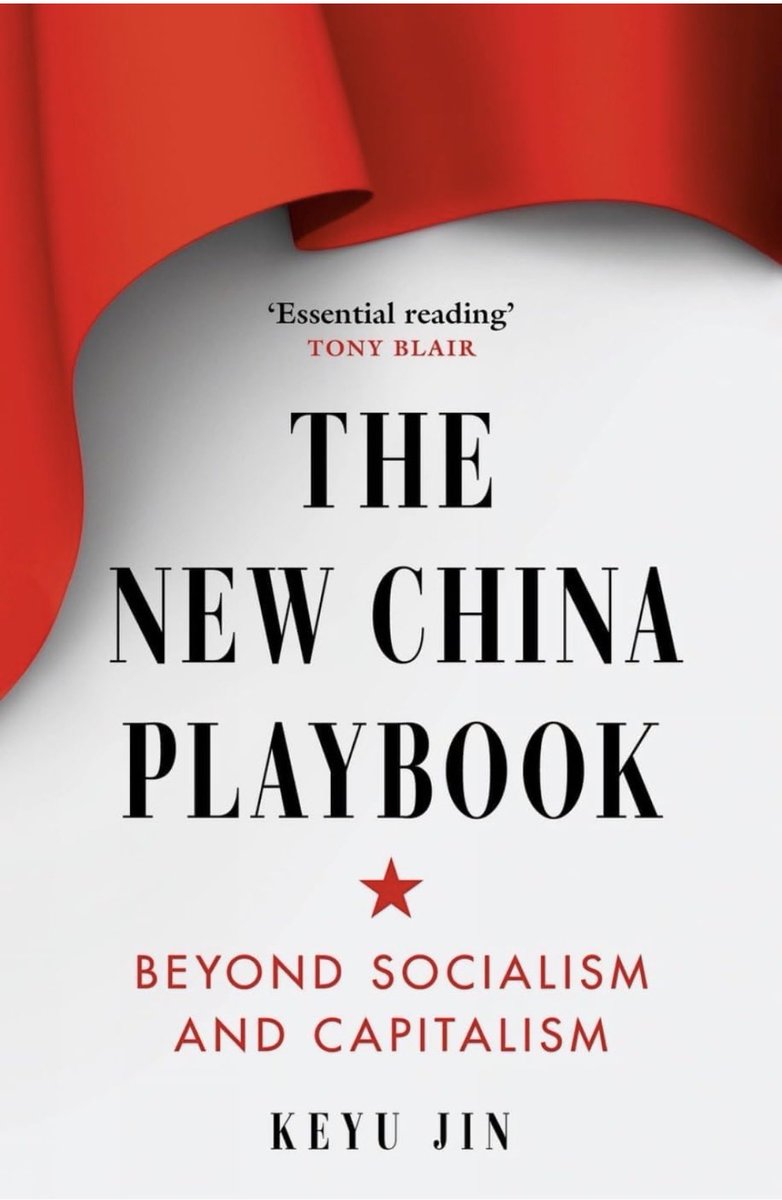
While she’s published a “New China Playbook” on economics and geopolitics, may have chosen the wrong genre—her real subject isn’t policy so much as affairs, power, and money, the three
时政
(
twitter.com
)
The Epstein Footnote Economist
https://t.co/ANKuLQjAT3
https://t.co/Kf8IcSa6Ge
While she’s published a “New China Playbook” on economics and geopolitics, @KeyuJin may have chosen the wrong genre—her real subject isn’t policy so much as affairs, power, and money, the three forces that move China.
For years she occupied a peculiar seat in academia and policy circles: polished, Western-trained, and reliably sympathetic to the CCP’s state-directed governance model. Then she truly entered mass public consciousness—via an alleged affair with Larry Summers, swept into the Epstein-file gossip ecosystem. After leaving London, she reappeared in Hong Kong, still packaged as an economist, still treated as establishment-adjacent.
But the latest exposé of her extra-marital life lands differently—because she has long been associated with senior Chinese bureaucratic circles, where “face” is not a preference but a requirement. That’s what makes the story so interesting: not the existence of an affair, but the way it appears to have been staged, tolerated, and folded into a business ecosystem already flashing red.
As reported, Yu Haijun—married to Chen Yingfei, father of six, and reportedly a joint controller of Baolide—began a relationship with Jin well before 2022, and they later had a daughter out of wedlock. Baolide, founded in 2001, was a major luxury auto dealership group with operations across brands like Mercedes-Benz, Audi, Jaguar Land Rover, Rolls-Royce, Porsche and more—once considered a leading dealer in East China. The relationship, in this telling, wasn’t just personal. It carried commercial value: Jin’s elite pedigree—especially her father’s vice minister ranking and his role as President of the Asian Infrastructure Investment Bank, financier of Belt and Road Initiative —may have offered something more useful than cash: credibility-by-proximity, the kind that can attract high-net-worth money even when the underlying business is wobbling. At its peak, Baolide was marketed as an IPO-bound luxury auto group, leveraging networks and institutional ties to sustain the “relationship-driven growth” story.
The most surreal episode is the alleged full-moon banquet for their daughter on July 24, 2022, staged at a high-end villa near Hangzhou’s Thousand Island Lake. Officially, it was staged as a Baolide shareholder and board meeting—dividends, future growth, the language of corporate governance. In practice, it was a lavish family theatre, with Jin’s parents attending alongside Yu’s wife Chen. Commercially, it functioned as “trust theatre”: a projection of confidence and normalcy while the company’s financial problems worsened—rising debt, overleveraged expansion, and performance narratives designed to keep investors leaning in. Reportedly, after the banquet, Yu and Chen orchestrated transfers of hundreds of millions out of Baolide entities, further straining cash flow and accelerating the crash dynamics. The crash has costed investors more than a billion USD.
What shocks isn’t that elites have affairs—China’s top circles are rampant with it. It’s the public choreography. In the traditional Chinese bureaucratic script, “face” is everything: force the divorce, formalize the new relationship, rewrite the narrative, move on—clean and domesticated. Here, the opposite seems to have happened. The affair wasn’t merely tolerated; it was absorbed into the family’s social order, with parents celebrating an out-of-wedlock granddaughter in the wife’s presence, while everyone implicitly pledging loyalty to a corporate machine allegedly sliding toward fraud.
In China, “face” is supposed to be the last thing you lose. This story suggests it may be the first thing Jin spend.
点击图片查看原图

