
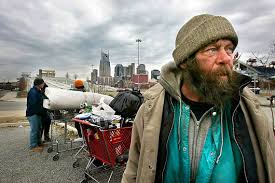
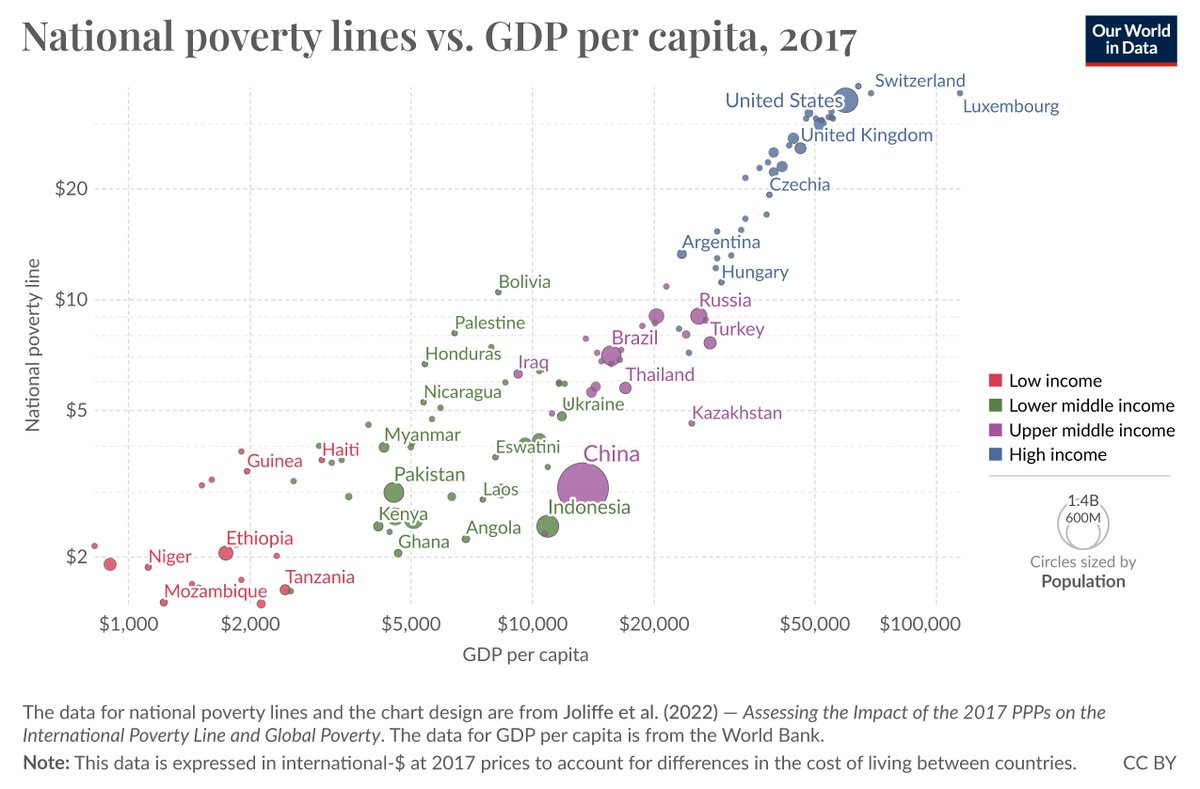
In the US, “poverty” means falling below a high floor. The so called kill line.
A poor individual is defined at about US$40/day
(U.S. Census Bureau poverty threshold).
Below that line, assistance doesn’t stop:
SNAP food aid: ~US$187/month per person (≈ US$6/day)
Medicaid:
时政
(
twitter.com
)
In the US, “poverty” means falling below a high floor. The so called kill line.
A poor individual is defined at about US$40/day
(U.S. Census Bureau poverty threshold).
Below that line, assistance doesn’t stop:
SNAP food aid: ~US$187/month per person (≈ US$6/day)
Medicaid: full healthcare coverage for low-income households
Housing, utilities, emergency care — all still exist
You can be poor — and still live inside a functioning system.
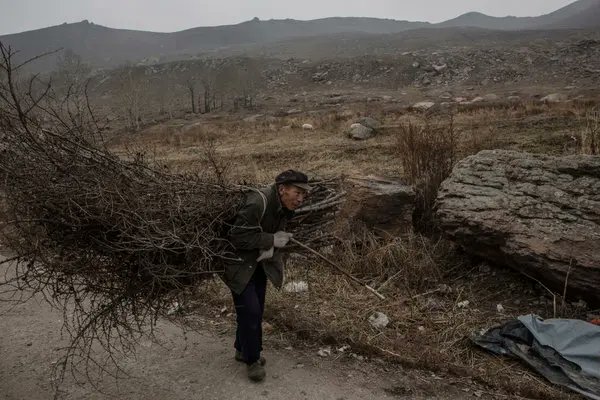
In China, poverty is defined against a low floor.
The official line was about US$1/day (≈ RMB 2,300/year, 2010 prices).
Cross US$1.01/day, and the system stops counting you as poor.
Support for the poorest exists — but it is minimal, conditional, and uneven:
Dibao (subsistence allowance): often ¥200–¥600/month in rural areas
Limited medical subsidies, often reimbursement-based
No universal food program
No guaranteed income floor once you cross the poverty line
Someone who qualifies as poor in the US would be materially comfortable by China’s poverty standard —
and would receive more public support alone than China’s “non-poor” earn in total income.
So this isn’t about who suffers more.
It’s about what the word “poverty” is allowed to mean.
When the floor is set at survival,
victory is guaranteed —
because dignity is never measured.
Poverty didn’t disappear.
The baseline did.
Where would you want to be?
点击图片查看原图
点击图片查看原图
点击图片查看原图

