
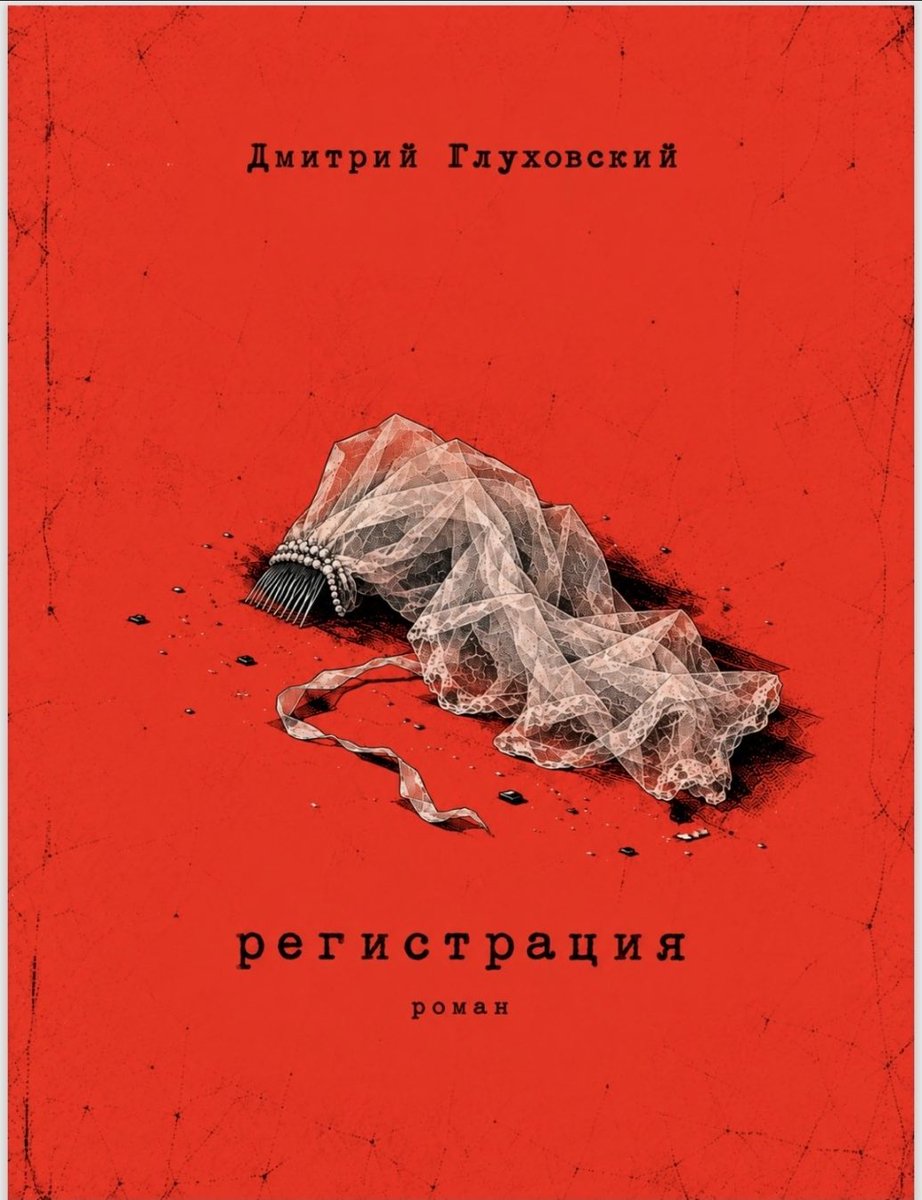
I finished reading Registration (2026), a novel by exiled Russian writer Dmitry Glukhovsky
If you want to understand Russian literature in the 2020s, this is the book for you to read. Glukhovsky’s Registration is probably the most talked-about Russian novel of the
时政
(
twitter.com
)
I finished reading Registration (2026), a novel by exiled Russian writer Dmitry Glukhovsky @glukhovsky.
If you want to understand Russian literature in the 2020s, this is the book for you to read. Glukhovsky’s Registration is probably the most talked-about Russian novel of the year, despite not being sold at Russian bookshops. The Russian state designated Glukhovsky as a “ foreign agent” in 2022 and sentenced him - in absentia - to eight years in prison in 2023 for his anti-war public statements. Instead, the author released the novel online for free, making it accessible to readers inside and outside Russia. It has sparked an extraordinary wave of discussion, although reliable readership figures are unavailable as of yet.
And this is the case for a good reason: Registration is a bleak, disturbing and politically charged portrait of contemporary Russia - a society in which war has become not just a national undertaking but an economic opportunity, and where moral boundaries are increasingly blurred by greed, fear and opportunism. The story centres on a young pregnant woman from the impoverished Vologda region in northern Russia, desperate to marry her boyfriend, a Russian soldier fighting in Ukraine, to secure access to the financial benefits available to military families. His mother has competing interests, turning what should be an intimate family drama into a ruthless struggle over money. Through this premise, Glukhovsky exposes the grotesque economic incentives created by Russia’s invasion of Ukraine, particularly in poorer provincial communities, where military service offers one of the few opportunities for substantial financial advancement - and where a soldier’s death can become more financially rewarding to his relatives than his survival. Russian economic geographer Natalia Zubarevich calls Russian military widows “town-forming enterprises” as she points to the fact how they reshape economic realities on the ground in the Russian provinces.
The novel’s greatest strength lies in its portrayal of the moral degradation and profound atomisation of Russian society. Glukhovsky paints a country where social solidarity has largely disintegrated, interpersonal trust is nearly non-existent, and individuals are left to navigate an increasingly brutal system on their own. Even family relationships, supposedly the last refuge of mutual support in any society, have become transactional, poisoned by competition over money and state benefits.
His characters are not particularly sympathetic, but that is precisely the point: they embody a society in which individual survival, material gain and moral indifference have displaced collective responsibility and empathy. This atomisation also helps explain the apparent paradox of contemporary Russia: widespread private dissatisfaction can coexist with political passivity, as people remain isolated, distrustful of one another and incapable of collective resistance.
Effectively, Registration is an indictment of the society sustaining the war against Ukraine. Unlike Glukhovsky’s dystopian fiction, its horror requires no imaginary future: it emerges from the realities of present-day Russia. The contrast between the poverty of the provinces and the enormous sums the state is prepared to pay for men - both Russian and foreign - to enlist and take part in its war makes the story particularly unsettling. Glukhovsky suggests that the war is not merely destroying Ukrainian cities and Russian lives but further corroding the social and moral fabric of Russia itself. The novel offers little hope of redemption: its bleakest insight is that a deeply atomised society, in which people increasingly see one another as competitors rather than fellow citizens, may be particularly vulnerable to authoritarian manipulation and prolonged militarisation. When people adopt a “dog-eat-dog” mentality, society sets itself on a path towards self-destruction.
点击图片查看原图

