
Around 2012, executives from Driscoll's, America's biggest berry company, toured Asia looking for a new market.
China was the obvious pick.
But when they looked at which fruit to bring, they found a problem: Japanese firms were already growing strawberries there.
Raspberries
时政
(
twitter.com
)
Around 2012, executives from Driscoll's, America's biggest berry company, toured Asia looking for a new market.
China was the obvious pick.
But when they looked at which fruit to bring, they found a problem: Japanese firms were already growing strawberries there.
Raspberries and blackberries were judged too foreign for Chinese palates.
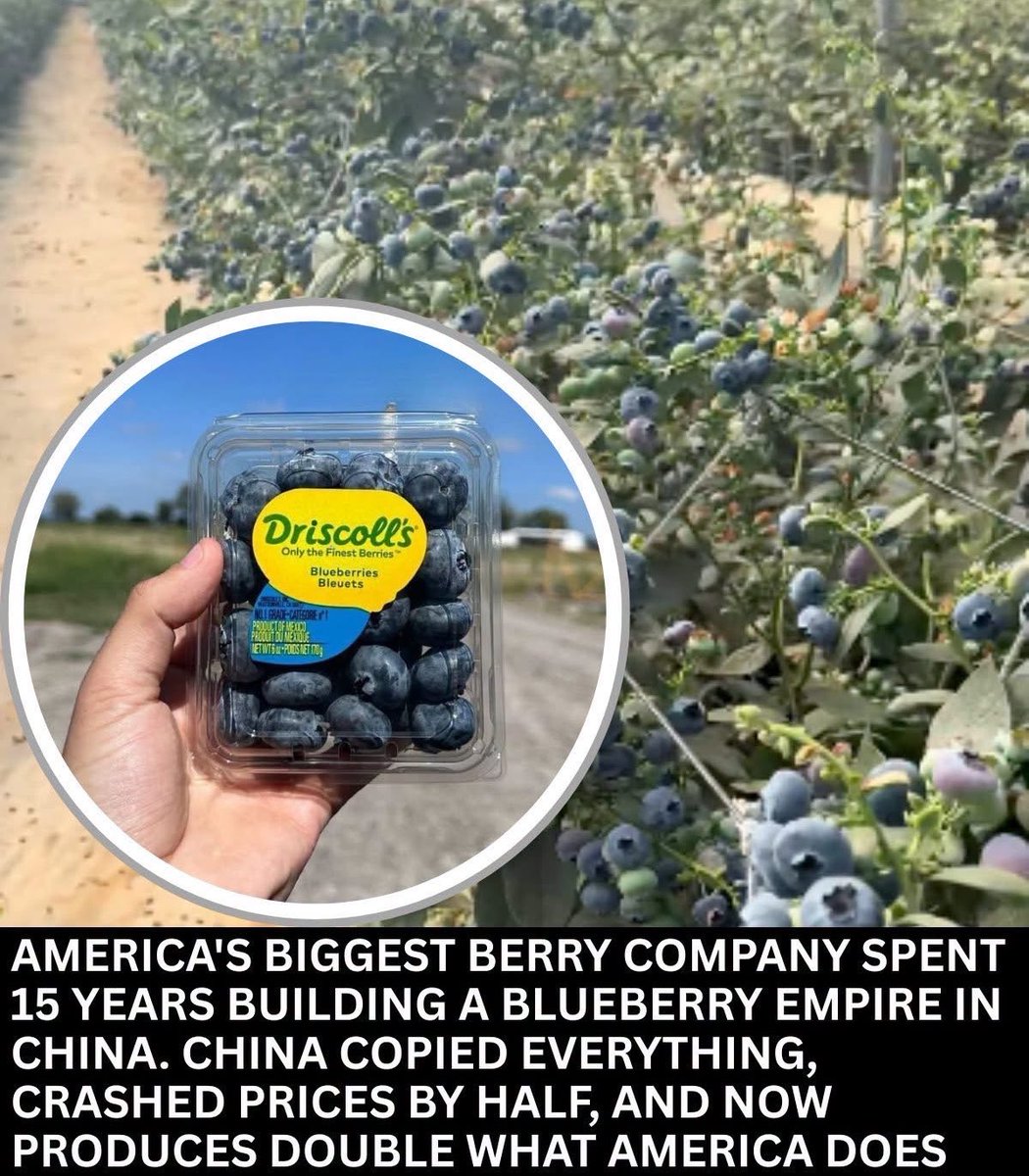
So Driscoll's went all in on blueberries, a fruit few people in China ate at the time.
It sent a top expert to scout farmland in Yunnan, licensed premium varieties, and built greenhouses with coconut-fiber pots and drip irrigation.
Within a few years it was working with more than 150 growers producing about 30,000 metric tons a year, roughly what all of California produces.
Then the copying started.
Chinese entrepreneurs built rival farms, allegedly copied the greenhouse designs, and, according to a Chinese court, took cuttings of Driscoll's patented plants and propagated them.
State banks offered a special loan category just for blueberry growers.
China's blueberry output is up 25-fold since 2010, passed the US in 2021, and hit double US production by 2025.
Prices fell by half or more, and Driscoll's has filed more than 20 lawsuits and won two.
Japan, meanwhile, had picked strawberries and stayed out of the blueberry knife fight entirely.
Was Driscoll's naive, or was this the price of entering China at all?
Source: WSJ, "Driscoll's Gave China Its Blueberries—Then China Swiped the Secret to Growing Them"
点击图片查看原图

