
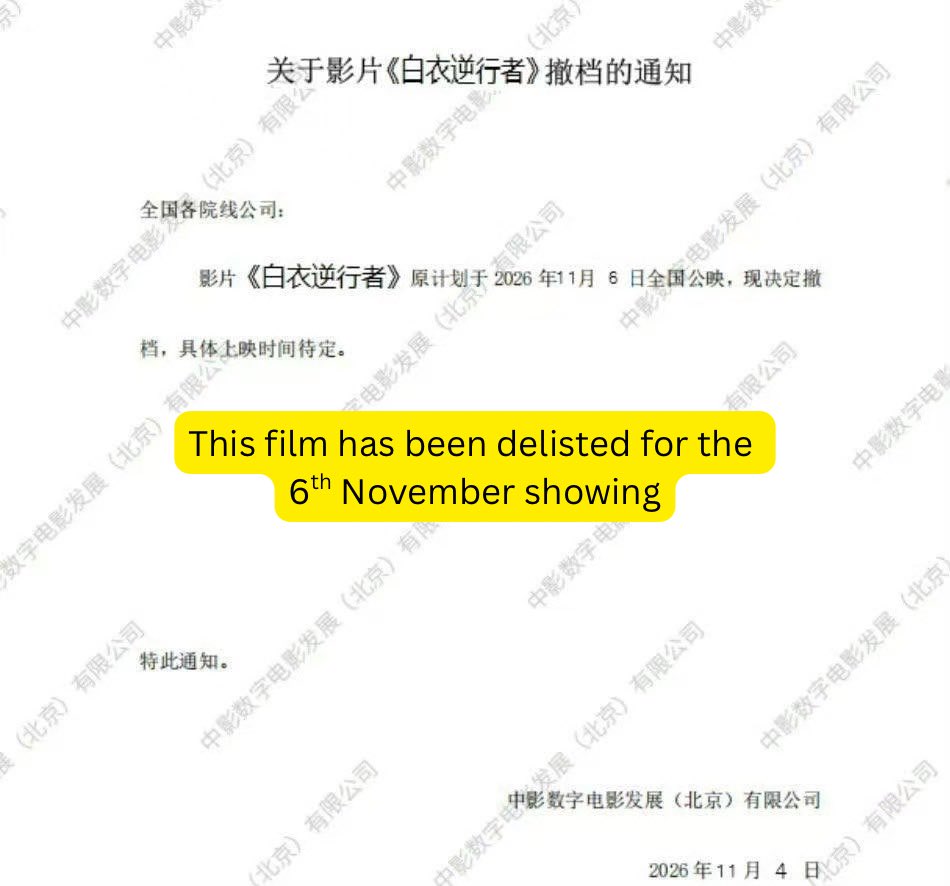
A film about the Wuhan COVID lockdown was quietly delisted in China on its scheduled release day — without any official explanation.
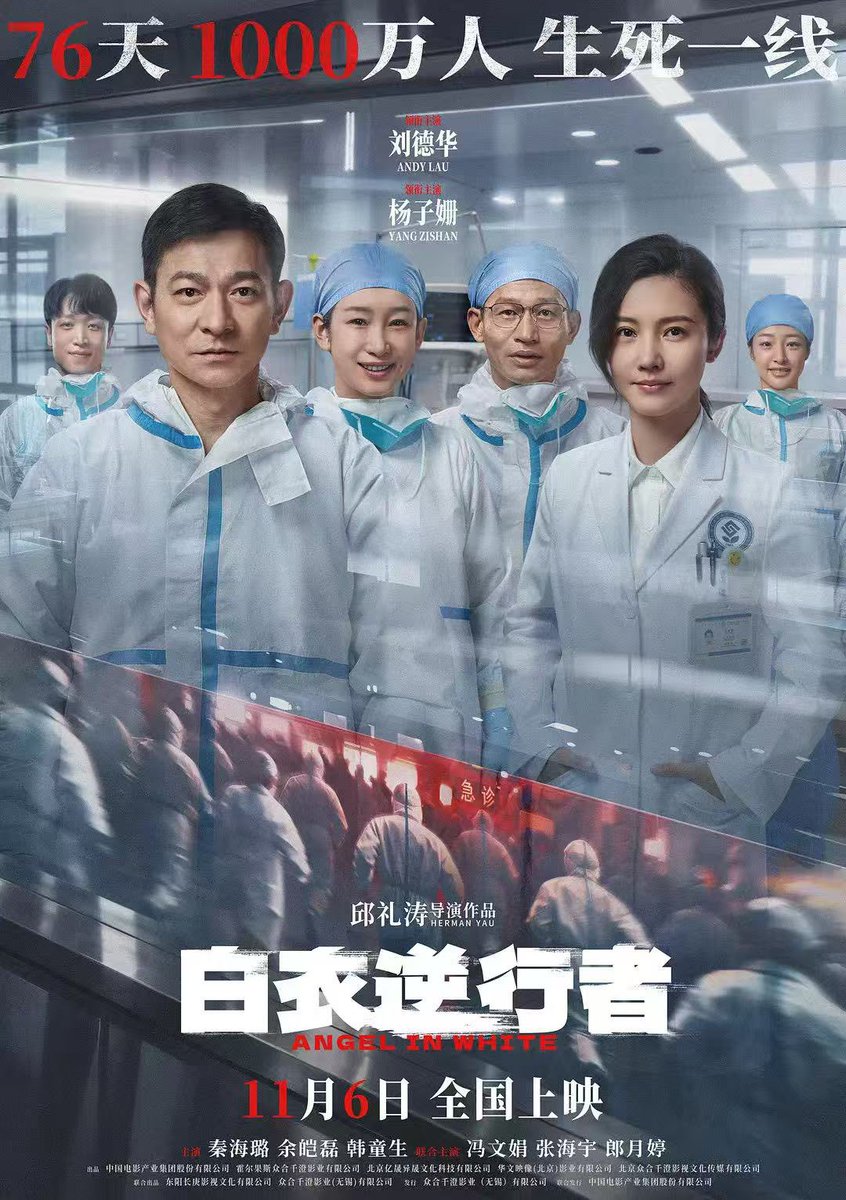
Angels in White (《白衣逆行者》), starring Andy Lau and directed by Herman Yau, recreates the 76-day Wuhan lockdown in early 2020.
Filming
时政
(
twitter.com
)
A film about the Wuhan COVID lockdown was quietly delisted in China on its scheduled release day — without any official explanation.
Angels in White (《白衣逆行者》), starring Andy Lau and directed by Herman Yau, recreates the 76-day Wuhan lockdown in early 2020.
Filming wrapped in December 2020. After nearly six years of delays and censorship hurdles, it was finally set for nationwide release on 6 November 2026.
On the day itself, ticketing platforms (Maoyan, Taopiaopiao) removed all sessions. Douban changed the release date to “2027 (undetermined).” The official Weibo went silent. No statement. Just a quiet disappearance.
This is not a technical glitch. It is a subtle, involuntary admission.
Even a heroic, Party-approved narrative about “white-clad angels” rushing into the crisis is now too toxic to show. Chinese netizens had already rejected it with comments such as:
• “伤疤都结痂了还抠开” (The scab has healed — why pick it open again?)
• “武汉人并不想看” (Wuhan people don’t want to watch this)
• “不想再回忆那三年” (I don’t want to remember those three years)
• References to Li Wenliang, the white-paper protests, and the Guizhou bus tragedy were quickly scrubbed.
The zero-COVID years left deep, unprocessed trauma.
A film that tries to turn that trauma into a controlled “positive energy” story risks reopening it in ways the authorities cannot manage. So they pulled it.
This is the same pattern that has long applied to other sensitive histories.
The Korean War is a clear example. For decades the official narrative has been fixed as the “War to Resist US Aggression and Aid Korea” (抗美援朝) — a defensive victory against American invasion.
North Korea’s invasion of the South, Soviet-Chinese coordination, and the UN’s designation of Chinese forces as aggressors are downplayed or omitted.
Under Xi Jinping this version has been aggressively revived and amplified (most visibly in the 2021 blockbuster The Battle at Lake Changjin), precisely because it serves current nationalist needs.
Earlier periods of relative openness in scholarship were rolled back; the preferred facts were reasserted.
The same logic explains why films about the Cultural Revolution, the Great Leap Forward, or Tiananmen remain tightly restricted decades later.
Once a historical trauma becomes politically inconvenient, the official approach is to suppress or rewrite memory rather than confront it. The delisting of Angels in White shows the mechanism is still active — only the topic has shifted from the 1950s–70s to 2020–2022.
The quiet withdrawal of even a heroic COVID film is the latest evidence that the Party’s preferred version of its own recent history is no longer safe to screen.
点击图片查看原图
点击图片查看原图

